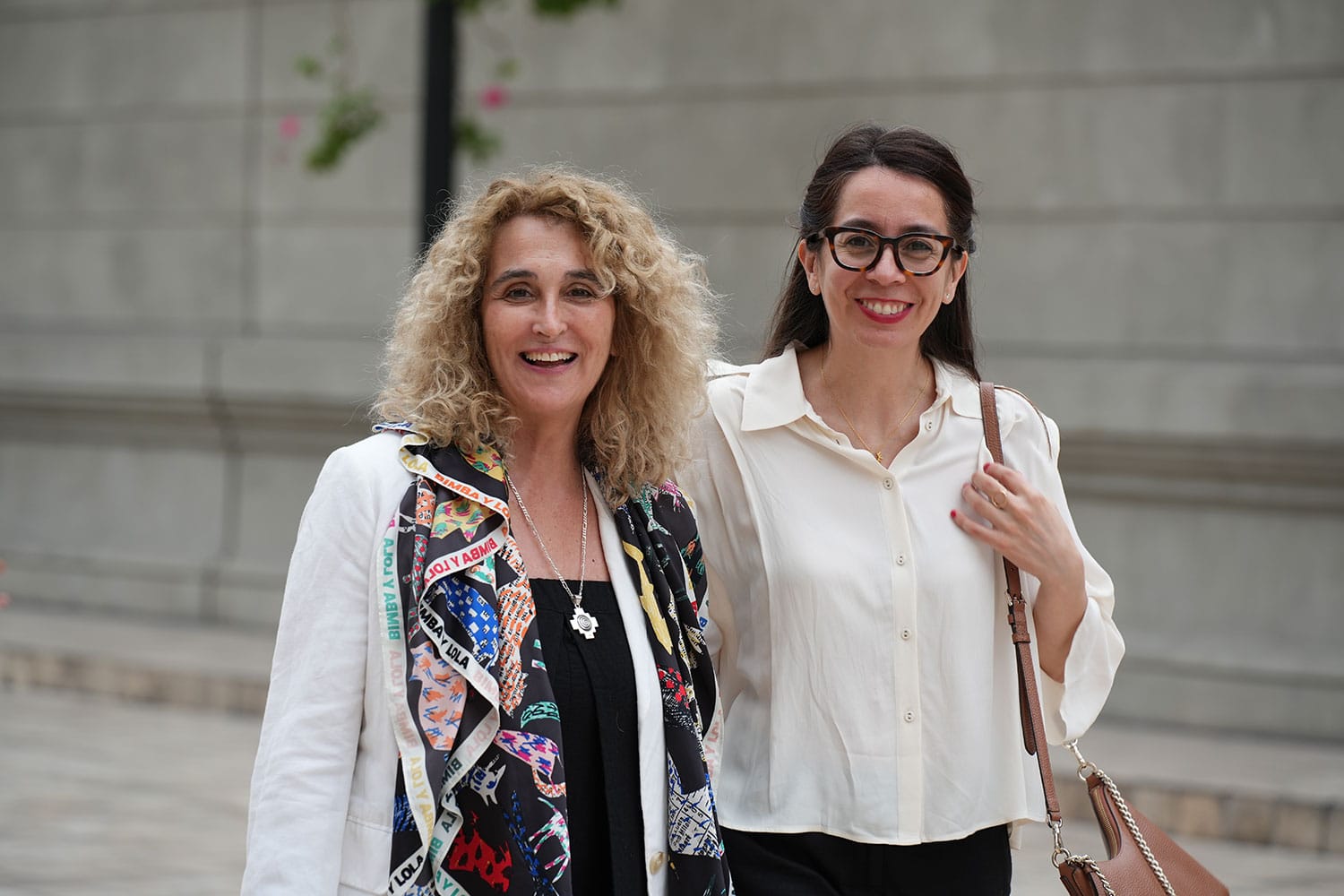
Fátima Alves, the driving force behind the Sopradores de Imagens project in Portugal
There is a way of making opera accessible that does not involve headphones or audio description booths. It involves one person sitting next to another, whispering in their ear what their eyes cannot see. That is what the Sopradores de Imagens do – and that is what Fátima Alves has been working to bring to Portugal.
The project is French; it began in 2009 and has expanded over the years to museums and theatres across the country, reaching the Louvre, the Musée d’Orsay and dozens of cultural venues. Fátima Alves discovered it whilst living in Paris; she undertook the training, became a “sopradora” herself, and it was then that she realised what the written word cannot convey. “When I became a ‘sopradora’, I realised the impact of this project. It was only through interacting with blind people and other ‘sopradoras’ that I understood just how valuable this was and what a difference it made”.
A sharing, not a favour
The distinction that Fátima Alves is keen to emphasise is this: describing images is not about doing a blind person a favour. It is about sharing. “Being with someone I don’t know, who cannot see, but for whom I will be the eyes – with my own difficulties and my own knowledge. It was an experience I saw as one of sharing. Not in the sense of, ‘Oh, I’ve done the blind person a favour.’ Nothing of the sort”.
The difference compared to traditional audio description is also a difference in philosophy. With audio description, there is a booth, there are headphones, and there is a monologue prepared in advance. It is an effective and necessary service, but one that depends on fixed dates chosen by the institution – a single session per month – and which does not allow for interaction. With Sopradores de Imagens, it is the blind person who chooses the day they want to go. “This aspect – the blind person choosing the performance and the day they want to attend – changes everything. In terms of accessibility, this is a massive change”.
How it works in practice
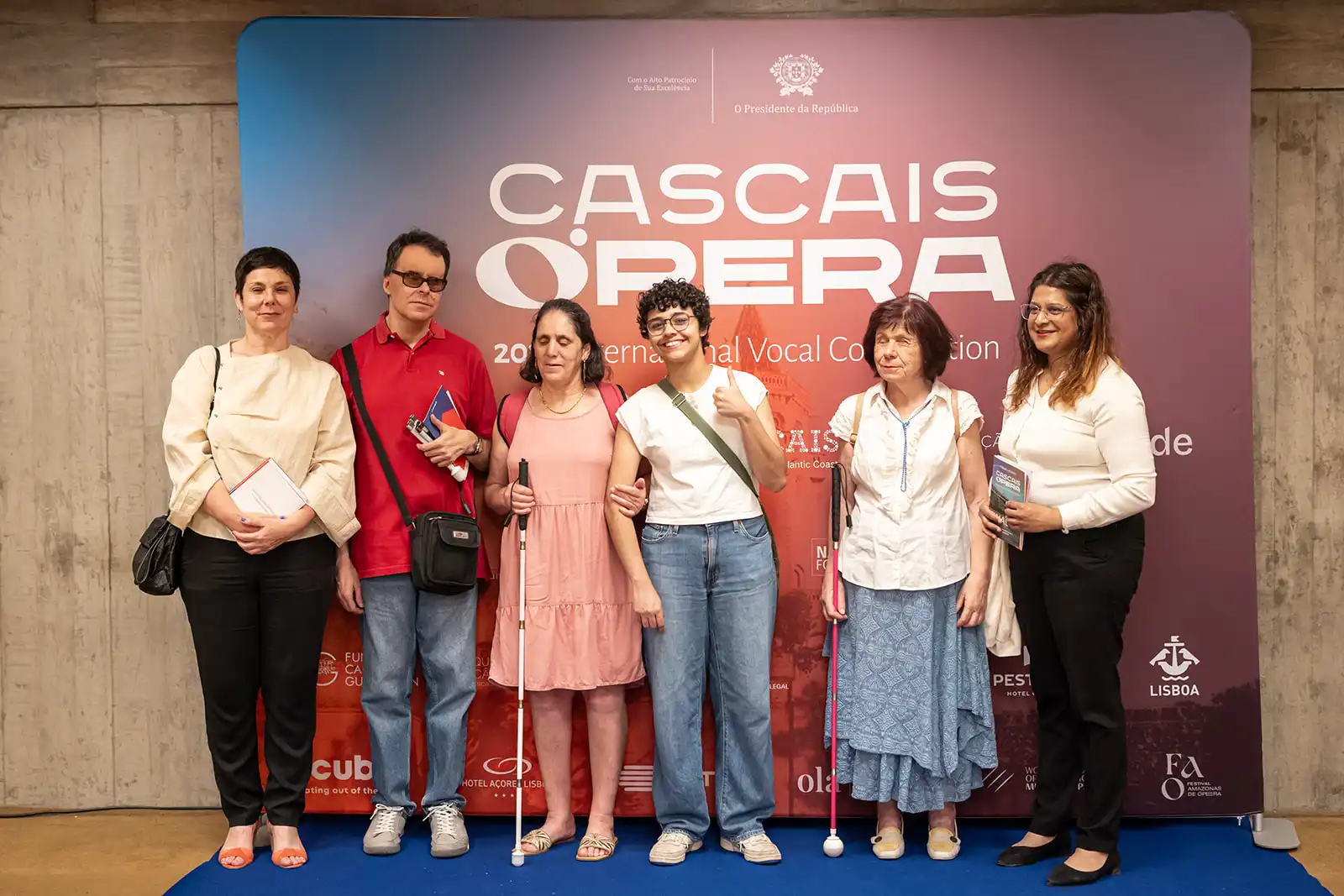
At Cascais Opera, the scheme worked as follows: a blind or partially sighted person contacts the association, indicates that they need a guide, and is matched with an available guide. The meeting point is at the nearest public transport stop to the venue – no one goes to anyone’s home. From there, each guide accompanies one person, on a one-to-one basis.
On the way to the auditorium, the conversation begins. “We find out whether the person is familiar with the venue, whether it’s their first time at the opera, whether they like music, and why they’ve come. That’s important so we can tailor what we say”. Inside the auditorium, the ushers inform audience members in the nearby rows of what they’re doing – so that no one mistakes the whispered conversation for a lack of courtesy.
During the show, the descriptions are given at just the right moments: before each performance, during the applause, and at the intervals. “Before each performance, we describe what the person is wearing, how their hair is styled, and what they do when they come on stage”. When the singers are singing, there is absolute silence. “It wouldn’t make sense to interrupt the singing. The aim is to listen to the music”. It is during the applause that the details that were left out are added – their posture, their movements on stage, their facial expressions.
Opera as a laboratory
The partnership with Cascais Opera was particularly significant: it was through this partnership that, for the first time in Portugal, wind players received specialist training in classical music. The training took place at Casa Sommer and included observing actual rounds of the competition – a unique opportunity to practise describing the music in an operatic context before reaching the final.
A project with ambitions to grow
Cascais Town Council is one of the project’s few partners in Portugal, and one of the most committed: it has decided that all museums under its remit will now be staffed by guide readers. For blind people using the service, this means being able to choose days and times with a degree of freedom that traditional audio description rarely offers.
Fátima Alves talks about all of this with the patience of someone who has come a long way – and with the conviction of someone who knows the model works because she has seen it work, first in Paris, then in Portugal. The goal was never to create a service parallel to audio description, but rather to complement it. To give blind people more choice, more independence, and more cultural experiences. And, at the same time, to give volunteers the experience of seeing the world through someone else’s eyes.