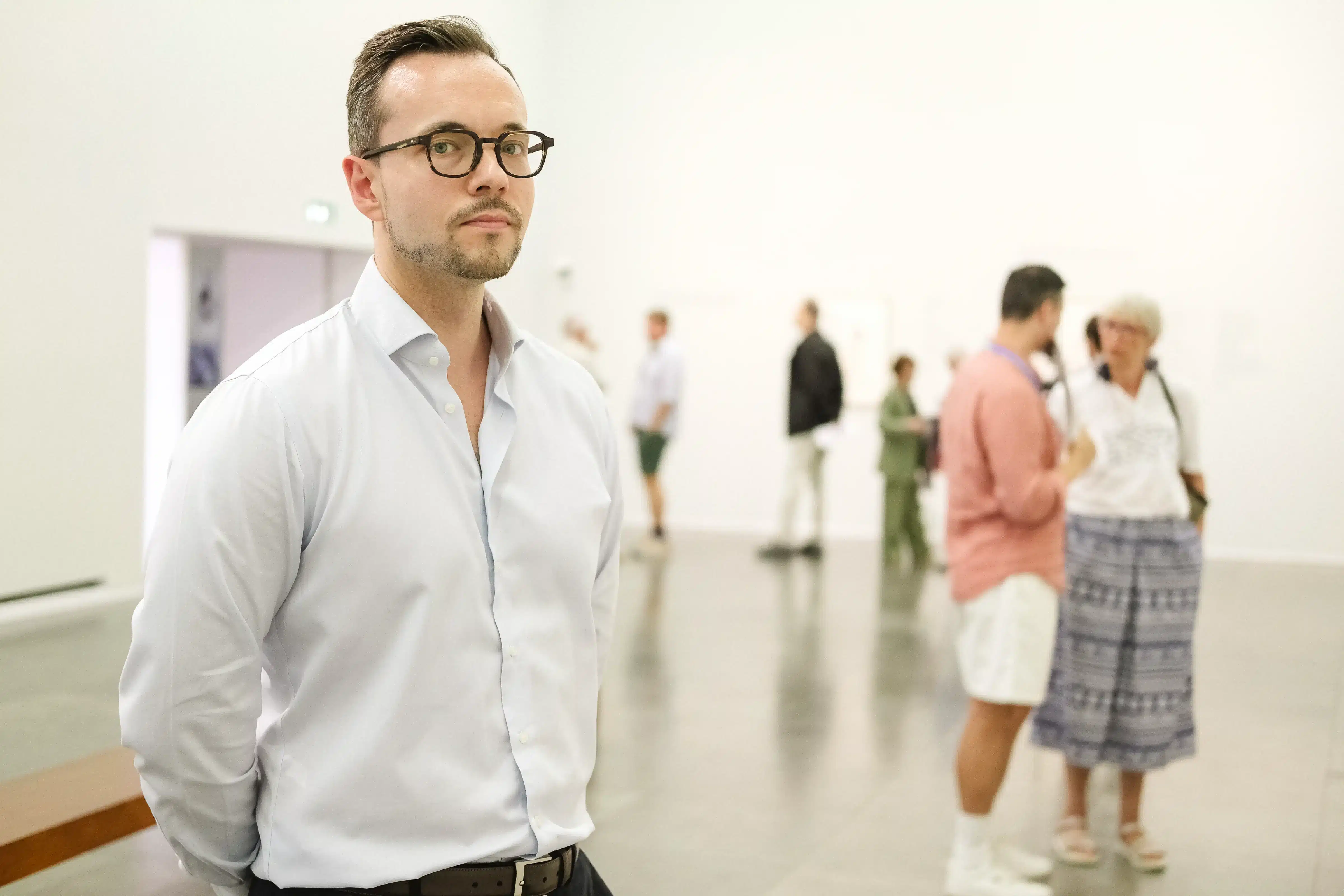
Florian Köfler, Director of Artistic Planning and Production at La Monnaie · Member of the jury for the Cascais Opera 2026 Competition
Florian Köfler knows what it’s like to be on stage. Before becoming Director of Artistic Planning and Production at La Monnaie in Brussels, he was a soloist – a member of the young artists’ programme at the MusikTheater an der Wien. And before that, he was a set designer. It is a career path which, he says, gives him a depth of understanding of what singing on stage truly demands that another manager, without stage experience, simply cannot possess.
“There are many implications that a great many people don’t truly realise,” he says of the act of singing in front of an audience. “Having been on stage and having had that experience – of really knowing what we’re asking of the singers at that moment – this life journey – I think it brings a nuance that perhaps other people wouldn’t be able to convey”.
What are you looking for
When Florian Köfler assesses a singer, he works through a hierarchy of skills. At the base: a natural and healthy way of singing – the foundation without which nothing else is possible. Then comes musicality, a sense of style. And then something much harder to define… and much rarer to find. “I’m looking for someone who tells me a story I want to hear. It’s very hard to pinpoint exactly what it is, but it’s simply something magnetic. A true performer we want to listen to”.
He describes it as a certain magnetism, a quality that makes someone not just a good singer, but a champion of what opera can be. “Only very few people truly have it,” he says. And it is precisely these people, he believes, that the art form needs for its future.
An admirer of future talent
One of the things that sets Florian Köfler apart as a member of the judging panel is his preference for what he calls ‘future talent’ – singers who may not yet be fully ready, but who possess something exceptional. “I often prefer to look a little further ahead, perhaps at people who aren’t quite ready yet, but who show great promise”.
The logic is simple: when a voice is almost there, “we always fill in the gaps in our knowledge with our dreams and aspirations that this voice, this artist, could be something truly exceptional in a few years’ time”. And artistic development, he insists, never stops. “Even if you’re 28, 29 or 30 and your voice has already matured to that point, it’s a lifelong learning process. You can develop immensely. Even in your 30s, 40s, 50s and beyond”.
To the finalists taking to the stage at the Gulbenkian, his message is simple and unequivocal: “It’s your show. Make it your story, make it your experience, and make us believe in your story. That’s what I’d like to hear”.