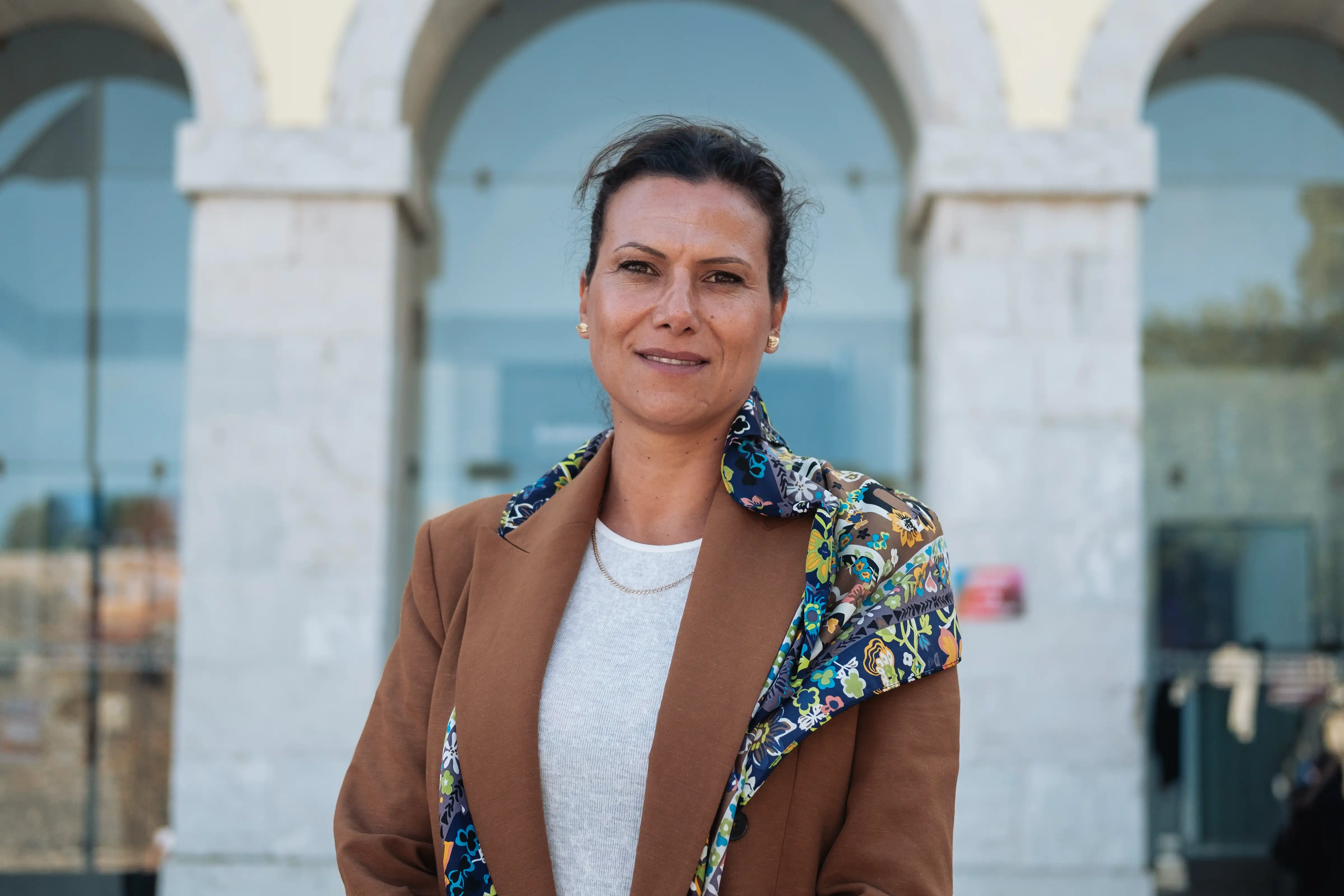
Juliane Banse, soprano and lecturer at the Mozarteum in Salzburg
Juliane Banse does not believe in specialisation. She never has, and today, she says, she believes in it less than ever. In a world where the market for singers has changed profoundly, versatility is no longer an advantage but a prerequisite. “It doesn’t work to say that I’m a Mozart soprano or an Italian soprano”, she says. “You have to be able to adapt quickly to different things”.
This statement carries particular weight coming from someone whose career spans five centuries of repertoire – from the Baroque to Puccini, via Mozart, Strauss and contemporary music. And who has found in the Lied – often regarded as a world unto itself – a key to better understanding everything else. “Working on the Lied trains the colour of the voice, expression and the handling of the text”, she explains. “And you can tell this when you hear someone singing an opera aria. You don’t need to know that the person has studied the Lied, but you can tell straight away”.
What the jury hears that the candidate cannot see
Sitting on the jury at Cascais Opera, Banse describes what happens in the opening minutes of an audition: “The candidates want to show off their instrument. It’s natural; it’s the instinct of someone under pressure. But an experienced jury is looking for something else: they’re looking for the person, the artist, the bearer of a character and an emotion”.
In this series, each contestant performed two arias in the first round. Banse watched closely as they transitioned from one aria to the next. “It was very interesting to see whether they really made that mental shift – from one character to another, from one style to another, from one emotion to another. That requires a mental discipline that goes far beyond simply showcasing one’s voice”. She summed it up with a phrase that has stuck with me: “Singing is like a microcosm”.
Turning frustration into a future
During the masterclasses she led at the Cascais Cultural Centre, Banse worked with the contestants who had not progressed in the competition. Her approach was both direct and generous. “The idea is to turn the frustration of no longer being in the competition into something constructive and positive”, she says. “We’re not here to tell them they’re not good enough. We’re here to help them take something home that will be useful in the work they’ll continue to do”.
It is a perspective that goes back a long way, to her own training with Brigitte Fassbaender, one of the great voices of the 20th century. What she took away from that experience was not just vocal technique: it was the idea of total commitment to the moment. “She taught me the need to throw myself into the moment, to identify completely with what I want to express. If it’s a recital with 24 Lieder, that’s 24 different emotional states. If it’s an opera, you are that character for two and a half hours. And then you must step out of it, but whilst you’re in it, you give it your all”.
That is what she is trying to convey. And that, according to her, is the hardest thing to teach, and the hardest thing to learn. “It’s a mental thing. It’s a state of mind. It requires courage, mental and emotional strength. And it’s probably the hardest part of it all”.