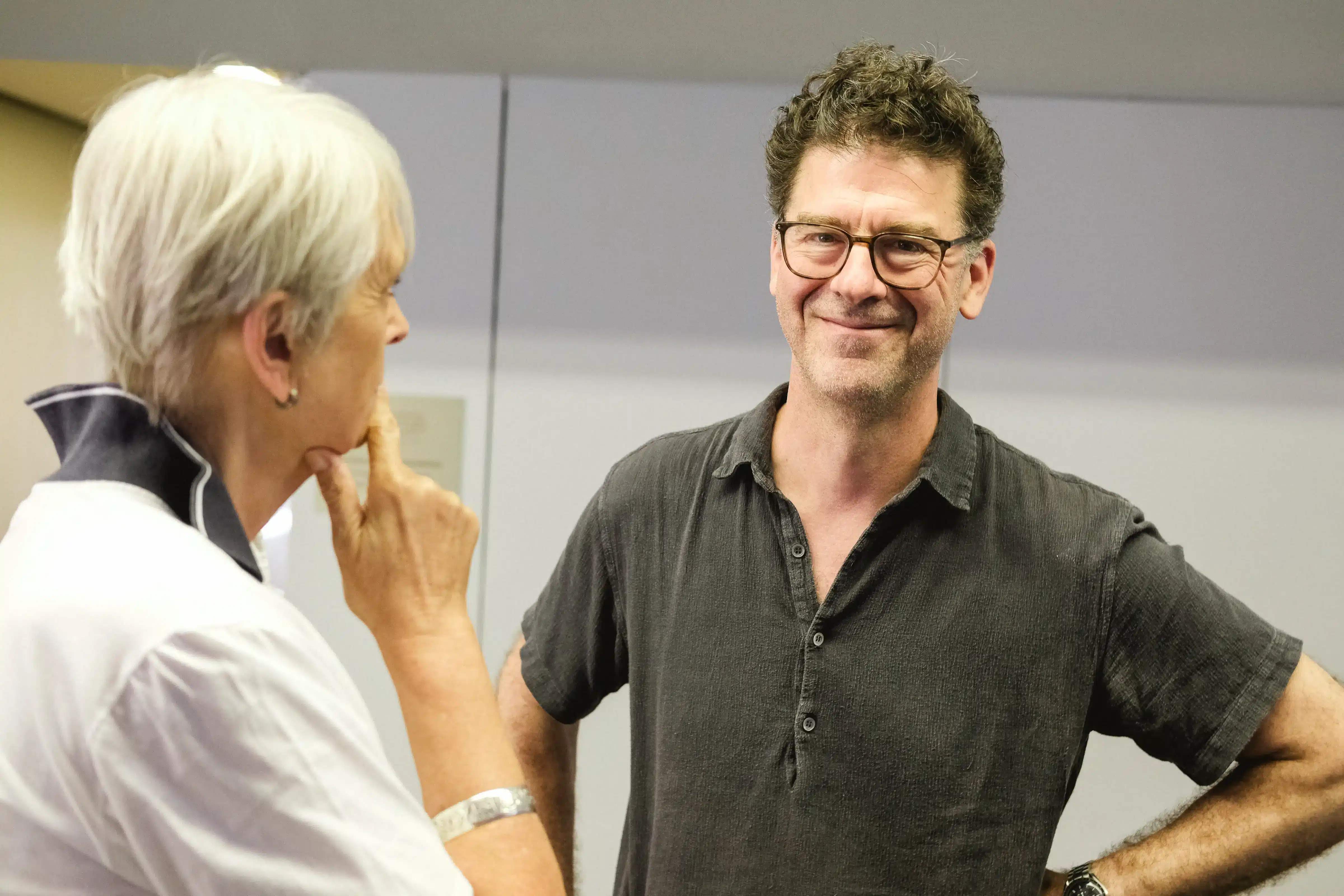
Benjamin Schwartz, Director of Artistic Programming, Bavarian Radio Symphony Orchestra · Member of the jury for the Cascais Opera Competition
Benjamin Schwartz came to Cascais Opera with a different perspective to most of his fellow jury members. He is neither an opera director, nor a singer, nor an agent. He is responsible for the artistic planning of the Bavarian Radio Symphony Orchestra – one of the world’s leading ensembles, currently conducted by Sir Simon Rattle – and brings to the jury table a perspective that is, as he himself puts it, “from outside the world of opera”.
“Perhaps it represents a different point of view”, he says. “I work regularly with leading international singers, we stage opera concerts every year, and we record major works from the operatic repertoire. But I come from outside the opera world. And perhaps that gives me a slightly different perspective from that of some of my other colleagues”.
A community, not just a competition
What impressed Benjamin Schwartz most about Cascais Opera was not the standard of the singers – although he was genuinely impressed, describing the finalists as being “of the highest international standard” – but rather the atmosphere of the competition itself. “When I arrived, I immediately felt that it was a community”. The administrative team, he says, was “so full of love and passion for what they do”. The masterclasses, the informal exchanges amongst the jury members, the warmth of the welcome – all of this contributed to something he hadn’t expected.
“Every competition has its own unique character, and this one is truly one of a kind”. The format – in which masterclasses run alongside the competition, the semi-finalists have their own concert, and the jury interacts informally with the contestants and the local community – is, in his view, what sets Cascais Opera apart.
Finding your voice
For young musicians looking to find their place in the professional world, Benjamin Schwartz has one piece of advice that stands out above all others. “Find your voice; discover who you really are”. It sounds like a cliché, he admits. But it is, he insists, the most important thing. “As a musician, everyone has something that is very distinctive and very personal”.
Benjamin Schwartz draws an analogy with painting: young artists copy the masters because they are fascinated by what others have done. But eventually, the copy must become something else. “You need to find your own distinctive voice. The truer to yourself you are as a musician, the more convincing and natural your communication with the audience will be”.
And what about the semi-finalists’ concert? “You never know who’s listening. You never know what opportunities might arise from someone hearing you play live”. What he’ll take away from Cascais is the community – and the certainty that something genuinely important is happening here.