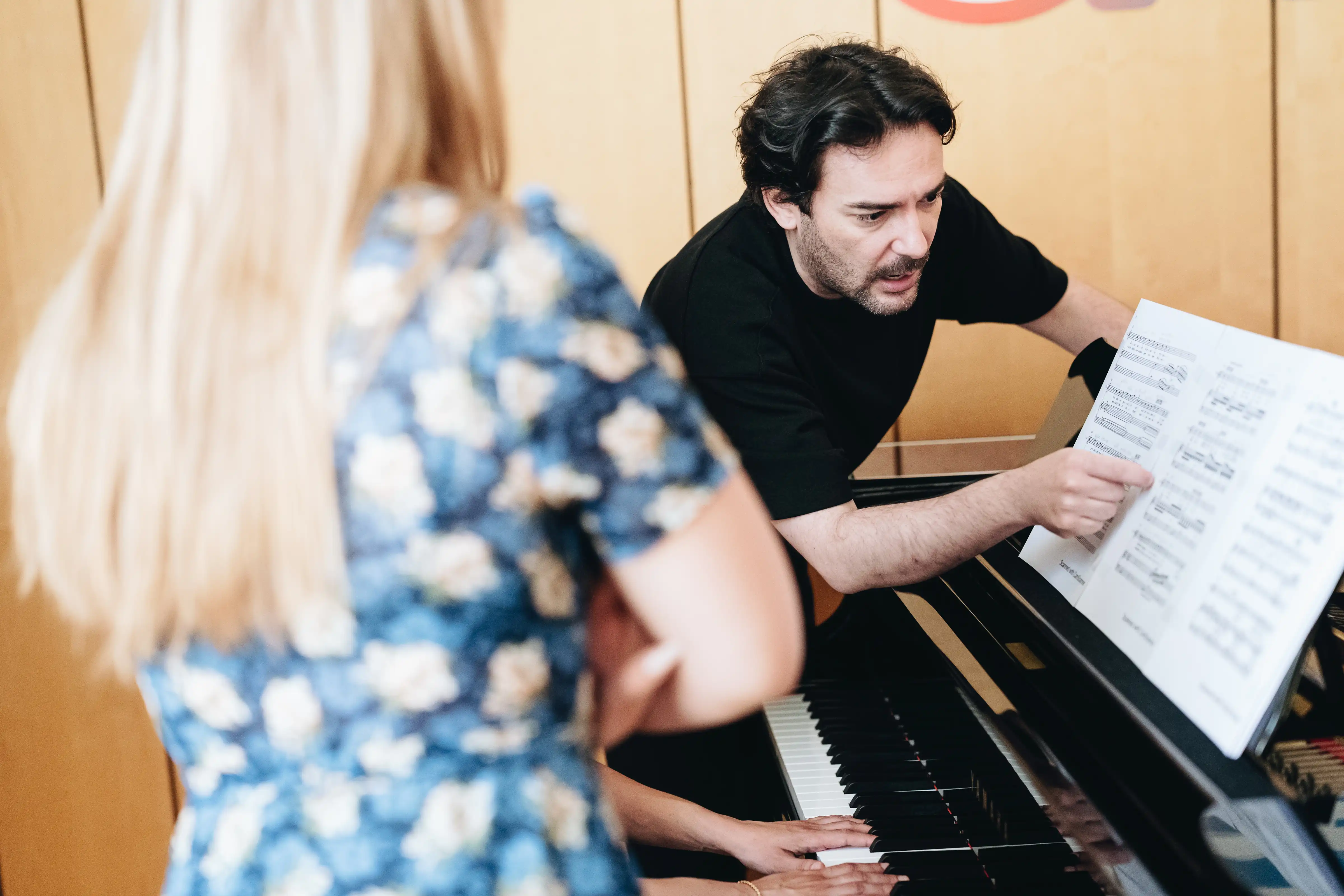
A masterclass is not a lesson. It is an encounter. It is the moment when a young artist sits face to face with someone who has walked the path – the great stages, the great careers, the great mistakes and the great discoveries – and receives what books and conservatoires rarely manage to provide: first-hand experience.
At Cascais Ópera, masterclasses are not a complement to the competition. They are an integral part of its mission. Because the project was always conceived as a platform – not just for those who reach the final, but for everyone who has passed through Cascais this week.
Today, Wednesday, this work continues, with the candidates who will take to the stage tomorrow at the Palácio da Cidadela for the Semi-Finalists’ Concert receiving specialised preparation – a final meeting with their mentors before a concert that is a unique opportunity to be heard by a discerning audience.
A Fresh Perspective: Aleksandar Nikolić
Aleksandar Nikolić began his career in opera as a pianist and set designer at the National Theatre in Belgrade, later working as a stage director, teacher and playwright. He studied Drama and Audiovisual Arts, Art History and Set Design, furthering his training in Brescia, Hanover and Thessaloniki. He has served as Principal Opera Director at the Serbian National Theatre in Novi Sad and is currently Senior Professor of Acting at the Academy of Arts in Belgrade.
For this masterclass, focused on preparing the singers for tomorrow’s Semi-Finalists’ Concert, Nikolić brings his experience as a stage director of productions including Don Giovanni, Le Nozze di Figaro, La Traviata, Rigoletto, Faust, Ai
His work with singers combines a strong understanding of musical and textual interpretation with extensive experience in stagecraft and character development. His sessions focus on the Italian and French repertoire, helping young artists move beyond vocal performance to develop a convincing stage presence and bring greater authenticity to their interpretations.
The returning mentors
Joining them today are mentors who have already worked with the contestants throughout this week – each with a different perspective, each making a specific contribution.
Liliana Bizineche, a lecturer at the University of Évora and winner of prizes in ten international competitions, works with the semi-finalists in a singing session offering more time and greater depth than the initial masterclasses allowed – 50 minutes per singer, a space to explore what remained unsaid.
María Bayo, a Spanish soprano with over 70 roles in her repertoire and one of the Iberian voices with the greatest international renown, does the same at the Condes de Castro Guimarães Museum – a space which, like the Paula Rego House of Stories where she has been working over the last few days, invites a more intimate and attentive listening experience.
Sergei Leiferkus – baritone, co-founder of Cascais Ópera and one of the great names in the world of opera – also returns to the Condes de Castro Guimarães Museum for further singing sessions with the semi-finalists. The same Leiferkus who announced the semi-finalists is today teaching and…
And Juliane Banse, who spoke of singing as “a microcosm” and of the importance of turning frustration into learning, is back at the Cascais Cultural Centre for another afternoon’s work with the semi-finalists.
Tomorrow’s concert as the destination
For many of the singers currently working with Aleksandar Nikolić and the other mentors, tomorrow will be a special day. The Semi-Finalists’ Concert, taking place at the Cascais Citadel Palace, brings together the twelve semi-finalists for an evening dedicated to Mozart – a tribute to the 270th anniversary of his birth.
It is a rare opportunity. To sing at the official summer residence of the President of the Republic of Portugal, following a week of intensive preparation, and under the watchful eye of jury members and industry professionals who, as Colin Brush recalled this week, also come to these competitions in search of voices for their programmes and institutions.
Today’s masterclasses are, in part, preparation for that moment. A final conversation with those who knows. A final adjustment before the stage speaks for itself.
The voices continue.