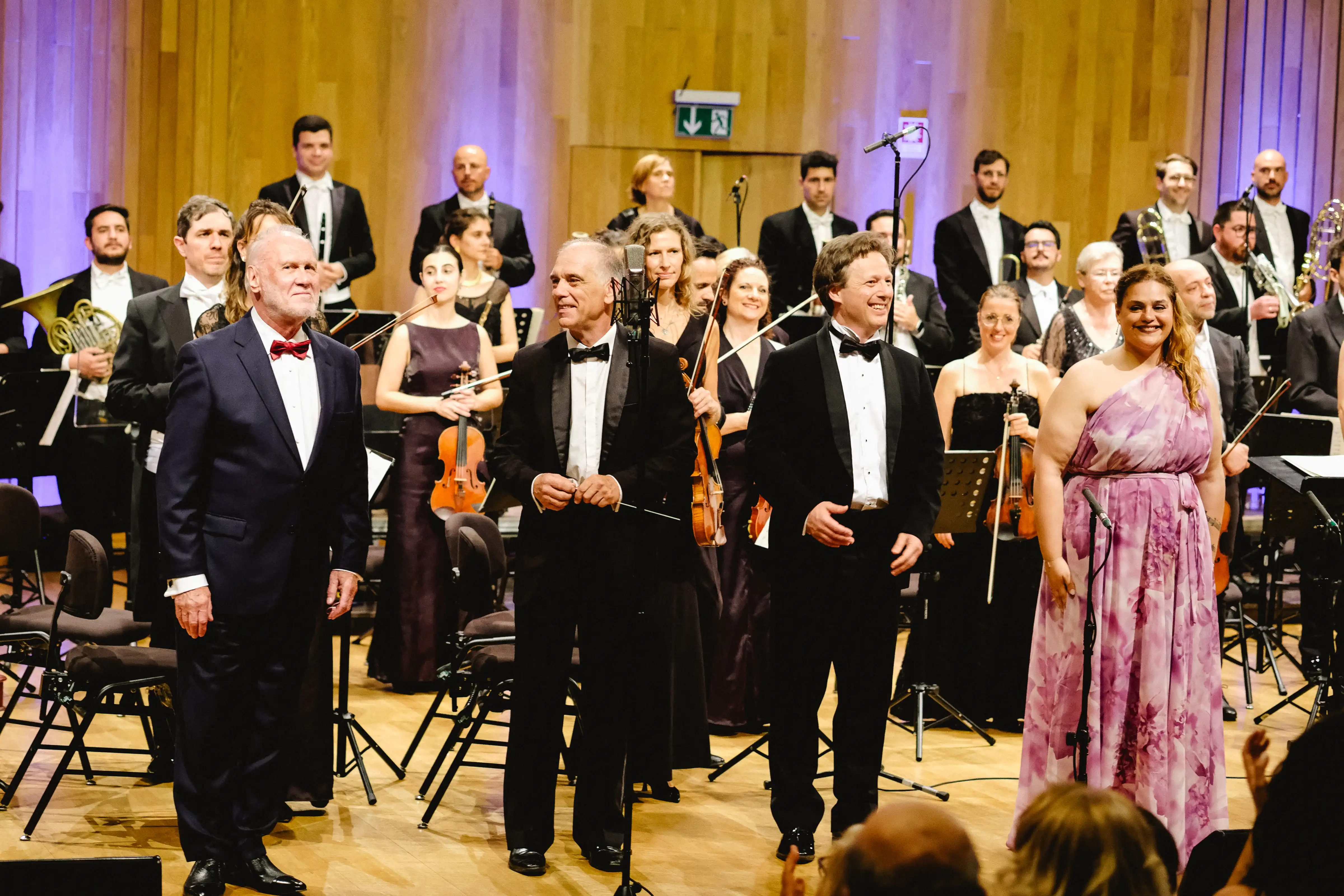
The Opening Concert of Cascais Ópera 2026 was much more than just an inaugural gala. It was a demonstration of the universal power of music – its ability to tell stories, stir emotions and conjure up images without needing words that everyone can understand. Even those who had never heard of Tosca or Nabucco understood, on this evening, exactly what was happening.
Inês Thomas Almeida, who explained the various arias that made up the concert, made this clear right from the introduction: Cascais Ópera exists to serve as a launching pad – a platform that introduces the great talents of tomorrow to the world. But the opening concert was also a reminder of what opera is, at its core: an art form that speaks the language of emotions. A language that transcends languages.
Verdi opens the evening – and the choir descends the stairs
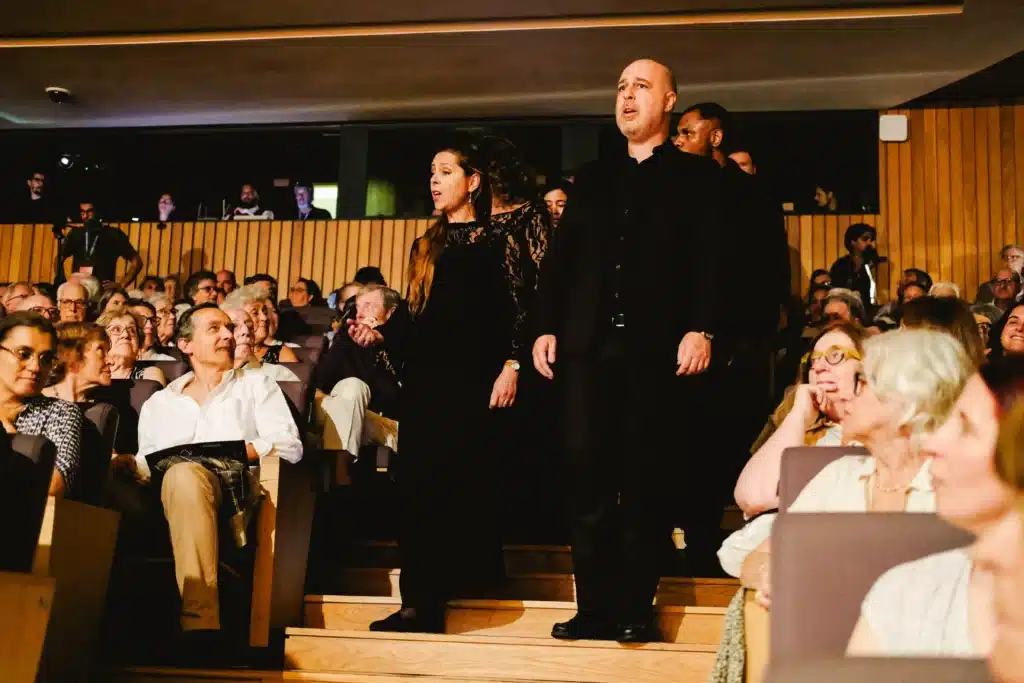
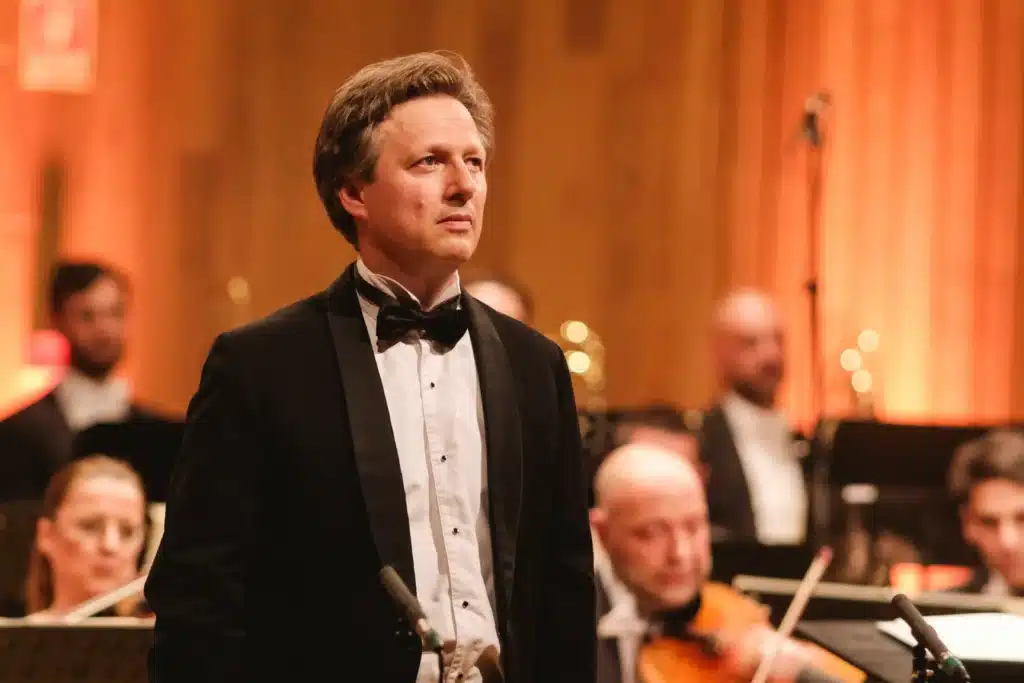
The Cascais and Oeiras Chamber Orchestra, conducted by Nikolay Lalov, opened the evening – the music speaking for itself, without voices, setting the scene for what was to come. And what followed was unforgettable: in ‘Va, pensiero’ from Verdi’s Nabucco (1842), the Coro Lisboa Cantat – 60 voices in total – made their first appearance descending the auditorium stairs with imposing strides, all dressed in black. The effect was immediate: the lament of the Hebrew slaves, one of the most recognisable moments in all operatic literature, took on an almost ritualistic dimension with this staging. An entrance that no one in the hall will ever forget.
Mascagni: pain that needs no translation
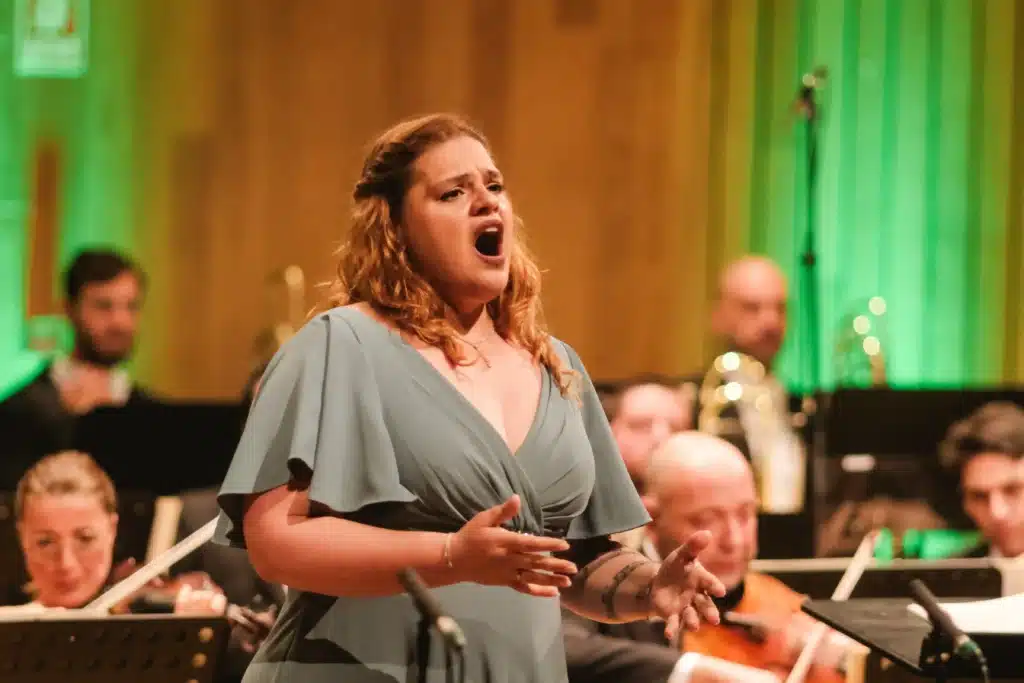
The first half concluded with “Voi lo sapete, o mamma” from Mascagni’s Cavalleria Rusticana, performed by soprano Sílvia Sequeira – one of the most demanding arias in the repertoire, in which a mother confesses her son’s forbidden love with a weight of guilt and pain that needs no translation. The orchestral Intermezzo that followed, one of the most famous moments in the entire opera, is a perfect example of the power of wordless music, serving as an elegant transition to the second half of the evening.
Tosca: when singers are also actors
Inês Thomas Almeida dedicated her second introduction to Puccini’s Tosca, which premiered in 1901. She described it as a work about external and, above all, internal challenges – and identified a particular quality in Puccini’s music: the ability to build the climax gradually, rising step by step until an emotional explosion that leaves the audience breathless. “There is a scent of the soul there,” she said, in a phrase that stuck in the memory. And she added something that sums up the power of this art form well: “for a moment, we hear and see, and we do not know whether it is the characters or ourselves”.
The story is simple in its brutality: the painter Cavaradossi, the soprano Floria Tosca and Baron Scarpia, the police chief and the ultimate villain. But it is precisely in this simplicity that Puccini’s genius lies – and the proof that opera is a language everyone understands, even without knowing a single word of the libretto.
Tenor John Pumphrey opened with “Recondita armonia” – the aria in which Cavaradossi paints Mary Magdalene whilst thinking of Tosca – giving way to the tense, jealousy-laden duet “Mario! Mario! Mario!”, in which Sílvia Sequeira burst onto the stage. Here, more than just singing, Sequeira acted. Her body language, her gestures, her gaze – everything communicated with a precision and intensity that went far beyond her voice. The two soloists were not merely performers; they were living characters, capable of telling a story with their whole bodies.
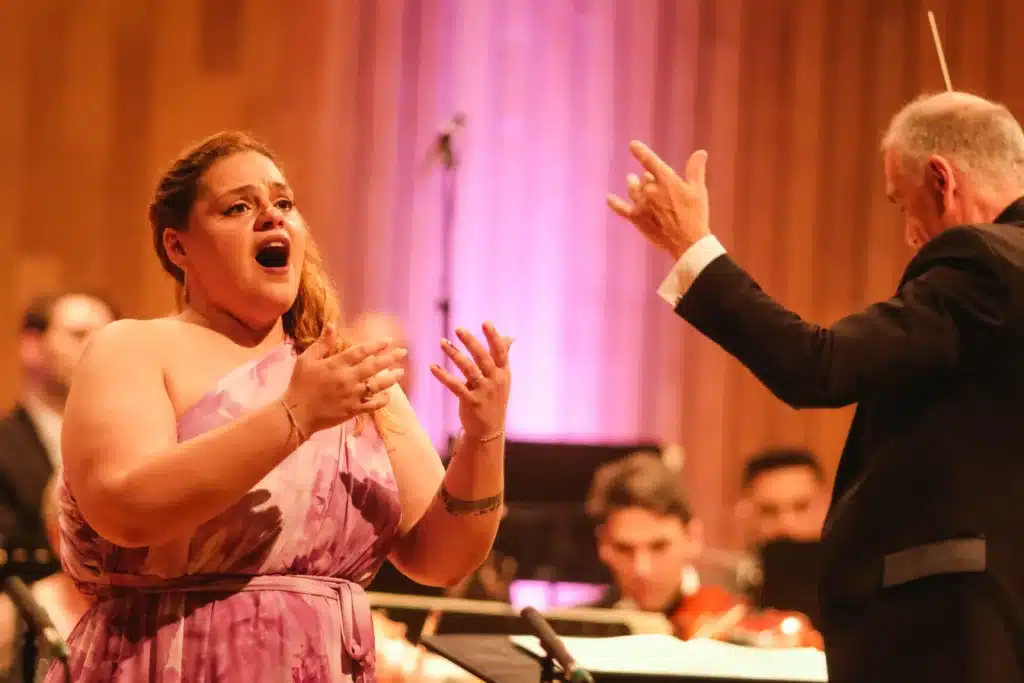
Sílvia Sequeira took to the stage alone for “Vissi d’arte” – the monologue in which Tosca questions God about the injustice of her fate, one of Puccini’s most famous arias and one of the highlights of the evening. Pumphrey responded with the heart-rending “E lucevan le stelle”, Cavaradossi’s farewell before his execution, in which despair and beauty go hand in hand.
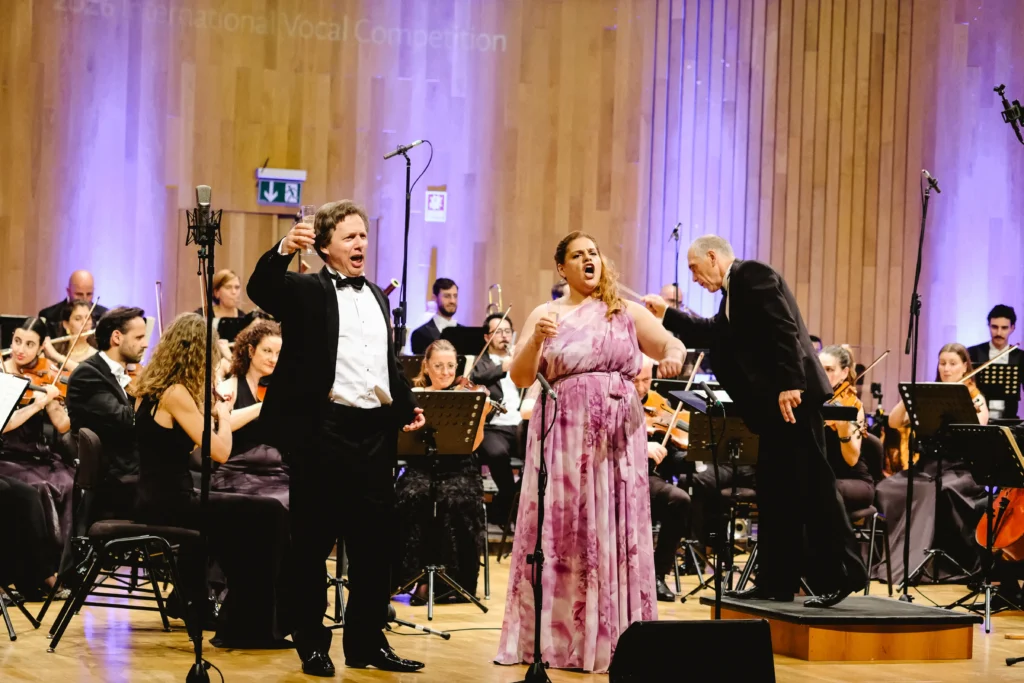
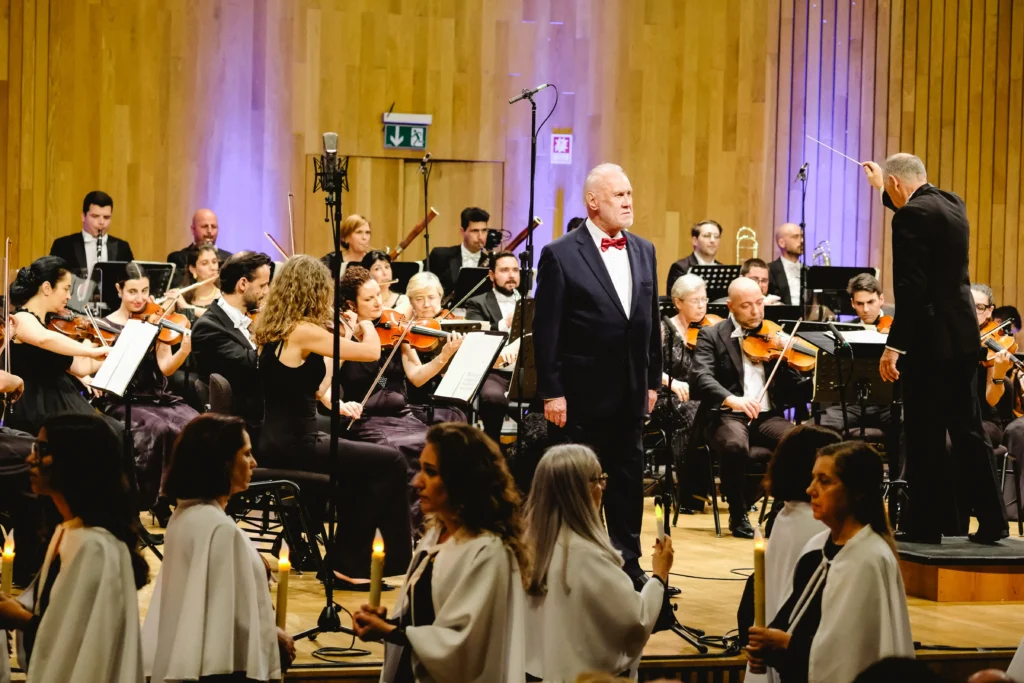
The climax came courtesy of Sergei Leiferkus – co-founder and president of the jury at Cascais Ópera, who this time took to the stage himself… in the role of the villain – in “Tre sbirri, una carrozza… Te Deum”: the moment when Scarpia gives orders to his henchmen whilst the chorus sings the Te Deum in the background. It was here that the choir made its second appearance, this time completely transformed: white robes and lit candles, an image of luminous spirituality in direct contrast to the villain’s obsessive darkness. The effect was one of remarkable theatrical impact – and further proof that Henrique Gomes and Felipe Toledo’s staging knew how to use the space and visuals to serve the emotion.
Champagne to round things off
The programme concluded with the finale of Act II of Johann Strauss II’s Die Fledermaus – ‘Im Feuerstrom der Reben’, the Champagne Chorus – bringing together all the soloists and the choir for a third and final appearance. This time, without solemnity or candles: the chorus members took to the stage in a completely different, relaxed and theatrical manner, simulating conversations amongst themselves, with camaraderie and light-heartedness taking the place of dramatic tension. A spot-on choice: after the tragic intensity of Tosca, the waltz and the celebration served as a reminder that opera is also joy – and that music, regardless of the language in which it is sung, is always capable of creating a story that everyone understands.
This was the performance that opened Cascais Ópera 2026. Everything is in place. The 40 singers from 25 countries who arrived in Cascais to compete saw, that night, what lies ahead for them, and what is asked of them. Not just voices. Stories.