Apply Now!

Two arias, one opportunity

highlight

There is a room at the Cascais Conservatory of Music where sound carries differently. It is a medley of voices – singers warming up, practising, repeating phrases they already know by heart, but which their bodies insist on confirming. Each in their own world, each in their own language, each in their own aria. And yet, together, they form something unique: the sound of those who wait. Of those who have rehearsed a thousand times and now can do nothing but go on stage.

On the first day of auditions for Cascais Ópera 2026, twenty-eight of the thirty-nine candidates appear before the jury. Two moments. Two arias. The time available to showcase a lifetime’s work.

They came from twenty-five countries. They went through auditions, preliminary rounds and months of preparation. They were chosen from among almost five hundred candidates – the selection panel listened to 998 arias before settling on these names. And yet, now, in the Conservatory’s corridor, all that seems to count for nothing. The moment that matters is this one. Only this one.

The Cascais Conservatory of Music is not a grand opera stage. It lacks the scale of the Gulbenkian or the history of La Scala. But these days, it possesses something few venues have: the absolute concentration of people who know exactly what is at stake. The jury on the other side. The voice on this side. And between the two, the music – that language which does not lie.
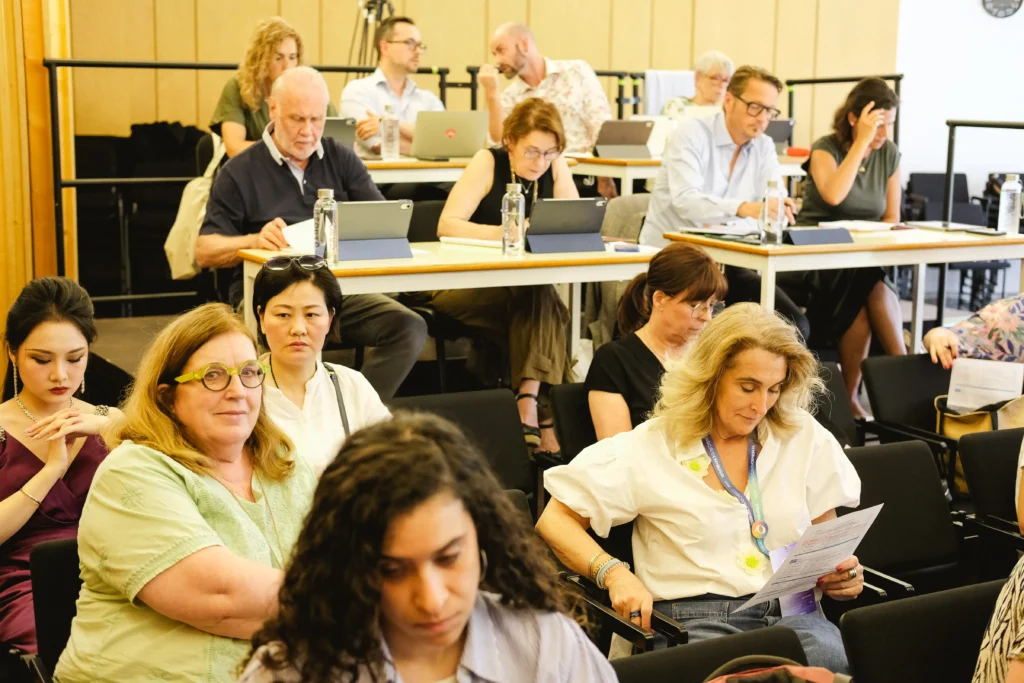
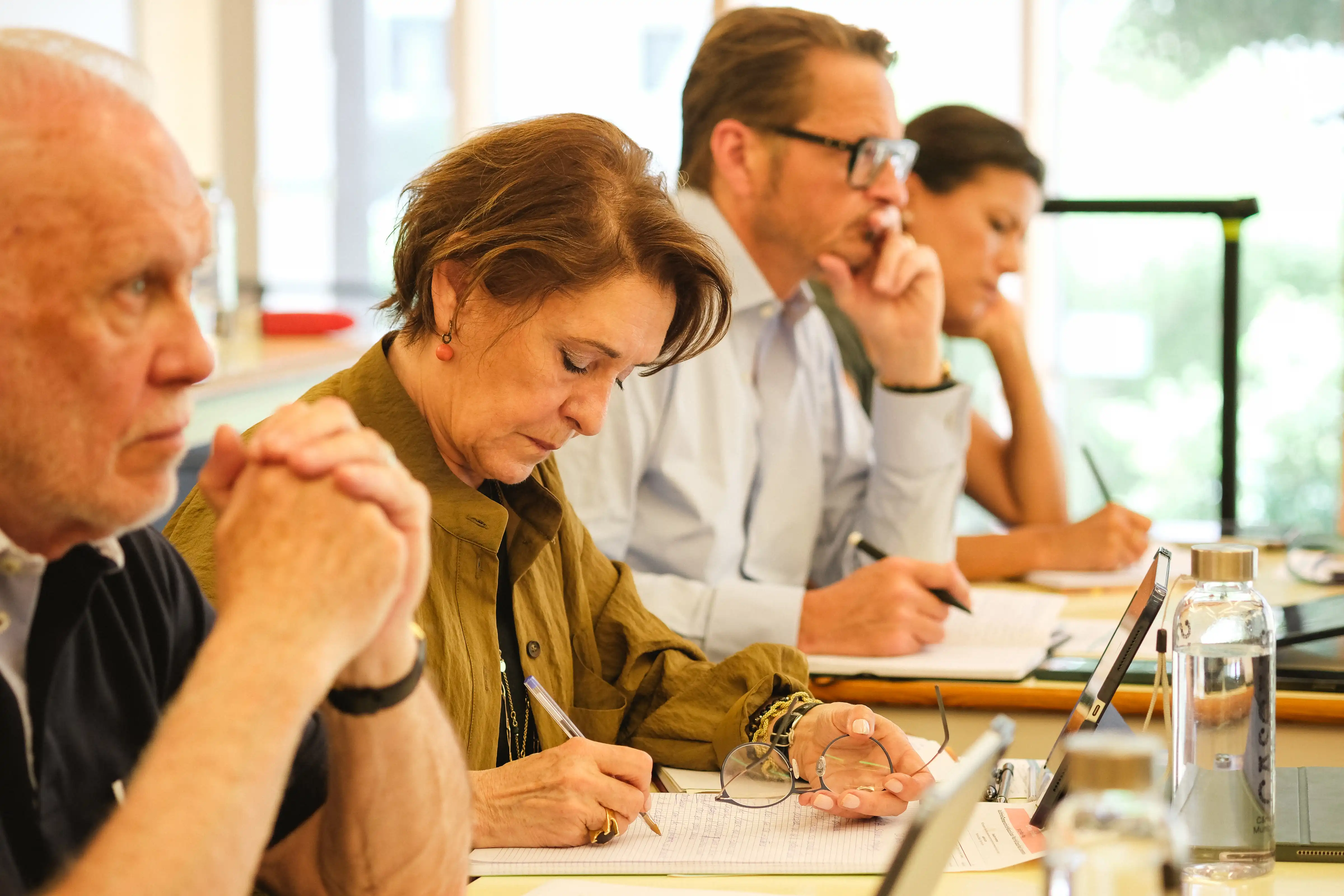
Cascais Opera jury. Preliminary rounds. Photo: Miguel Ferreira

Each candidate has chosen their two arias with care. They are their argument, their calling card, the territory where they feel most secure – or where they decide to take a risk. Some arrive with Verdi, some bring Puccini, some put their faith in Mozart. The jury listens to all of this. They listen to what is in the score and what lies beneath the score.

Outside, Cascais goes about its day. The sea is just a few minutes away. The town has a rhythm all of its own, oblivious to the tension within those walls. But in here, time works differently. Here, every entrance is a little world that opens and closes. Every voice that rings out is a story that begins.

This is how Cascais Ópera begins. Not with applause – that will come later. It begins with this particular silence, with this nervousness that is not weakness, but proof that something truly matters. With twenty-eight singers who entered a room and gave everything they had. And with a jury who listened to them as only those who have loved opera all their lives know how to listen.

The remaining eleven perform tomorrow. The voices continue.
other news

Over the past three decades, primarily in London, Portugal and Amsterdam, Dr Jorge Balça
has developed a strong portfolio of work and a unique combination of skillsets – as a stage
director (of theatre, opera, and hybrid forms), a teacher and workshop leader, a presentation
skills, acting and creativity coach, and practice-based researcher. His work in all these
domains is distinguished by his commitment to and skill in making fantasy and invention
emerge from precise knowledge and training – and by his ability to inspire a similar alchemy
in his collaborators.

Classically trained as an actor and countertenor, he studied theatre directing in London and
Moscow, specialising in Shakespeare, techniques of adaptation, Meyerhold and commedia
dell’arte. Jorge also holds a PhD exploring the dramatic training of opera performers.
With a love for site-specific projects and collaborative forms, and an equal flair for comedy
and drama, his work is dramaturgically inventive, visually striking, and physically engaged.
He was the artistic director of Bloomsbury Opera and associate director of The Opera
Makers, both in London. In Portugal, he has recently directed L’Heure Espagnole and The
Turn of the Screw at Centro Cultural de Belém, and Don Giovanni and La Voix Humaine at
Festival de Ópera de Óbidos.

Jorge is committed to his work as a teacher, having taught at the Dutch National Opera
Academy, Morley College London, Universidade de Évora and other institutions. He
maintains an international coaching private practice and is the acting coach at the Neil
Semer Vocal Institute in Italy.

Newsletter
Cascais opera

Thank you for Subscribing to our Newsletter!

Over the past three decades, primarily in London, Portugal and Amsterdam, Dr Jorge Balça
has developed a strong portfolio of work and a unique combination of skillsets – as a stage
director (of theatre, opera, and hybrid forms), a teacher and workshop leader, a presentation
skills, acting and creativity coach, and practice-based researcher. His work in all these
domains is distinguished by his commitment to and skill in making fantasy and invention
emerge from precise knowledge and training – and by his ability to inspire a similar alchemy
in his collaborators.

Classically trained as an actor and countertenor, he studied theatre directing in London and
Moscow, specialising in Shakespeare, techniques of adaptation, Meyerhold and commedia
dell’arte. Jorge also holds a PhD exploring the dramatic training of opera performers.
With a love for site-specific projects and collaborative forms, and an equal flair for comedy
and drama, his work is dramaturgically inventive, visually striking, and physically engaged.
He was the artistic director of Bloomsbury Opera and associate director of The Opera
Makers, both in London. In Portugal, he has recently directed L’Heure Espagnole and The
Turn of the Screw at Centro Cultural de Belém, and Don Giovanni and La Voix Humaine at
Festival de Ópera de Óbidos.

Jorge is committed to his work as a teacher, having taught at the Dutch National Opera
Academy, Morley College London, Universidade de Évora and other institutions. He
maintains an international coaching private practice and is the acting coach at the Neil
Semer Vocal Institute in Italy.

This site uses cookies for a better user experience.

By using this site you are agreeing with our Privacy Policy and Terms and Conditions