Some concerts take place in concert halls. Others take place in venues. The Cascais Opera 2026 Semi-Finalists’ Concert clearly falls into the latter category. On an early June evening, the Cascais Citadel Palace – the summer residence of the President of the Republic, with centuries of history etched into its walls – welcomed twelve young voices for an intimate tribute to Wolfgang Amadeus Mozart, in the year marking the 270th anniversary of his birth.
The choice of venue was no accident. To sing in that space is to sing in a place that has heard kings and presidents, that holds memories of the Portuguese Royal Family and heads of state from around the world. And it is, at the same time, to sing in an atmosphere of rare intimacy with the audience – without the distance of large auditoriums, without the formality of traditional opera houses. An intimacy that, on this evening, proved to be the perfect setting for what unfolded.
Singing in freedom
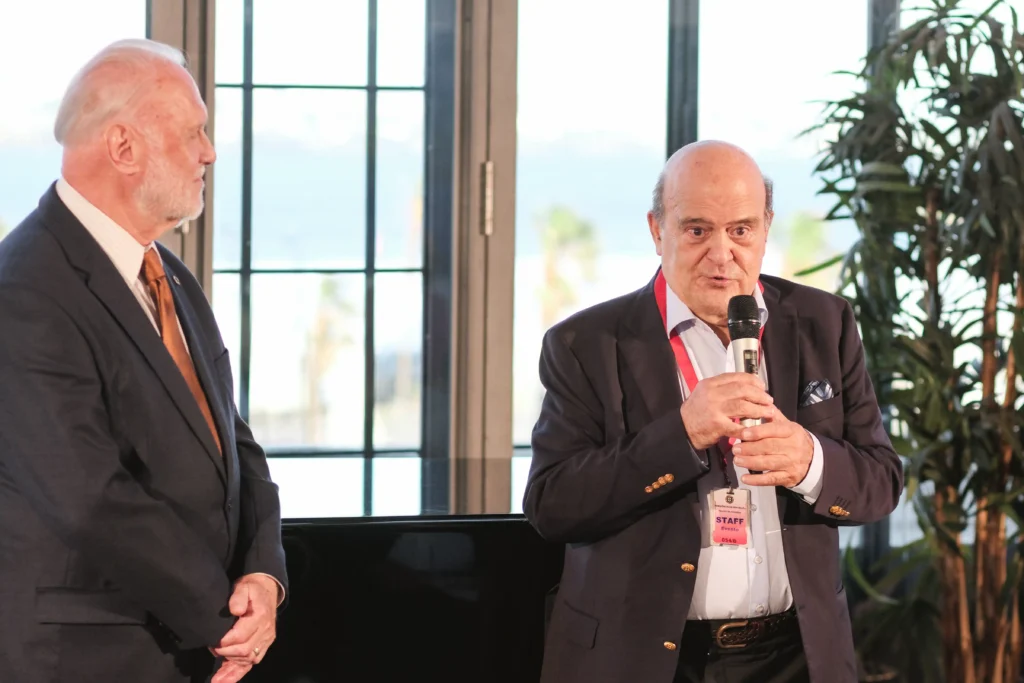
Adriano Jordão, artistic director of Cascais Opera, put it perfectly before the performance began: these twelve semi-finalists had only rehearsed the day before, had come from the four corners of the world, and didn’t know one another. And yet, they put together an opera programme with a joy that, in his words, he had rarely seen. “People celebrating, with such joy, the fact that they hadn’t made it through,” he said. Because here, without the weight of the jury, without the pressure of the competition, they sang in freedom – for the audience, for themselves, and for Mozart.
Sergei Leiferkus added: “Mozart is like a textbook for all musicians. You could say that Verdi is number one, Puccini number two… or the other way round. But to ignore the role Mozart has played in our social and musical life is simply impossible”. And he asked the audience to support the young singers, who were visibly nervous. The audience obliged.
An all-Mozart programme
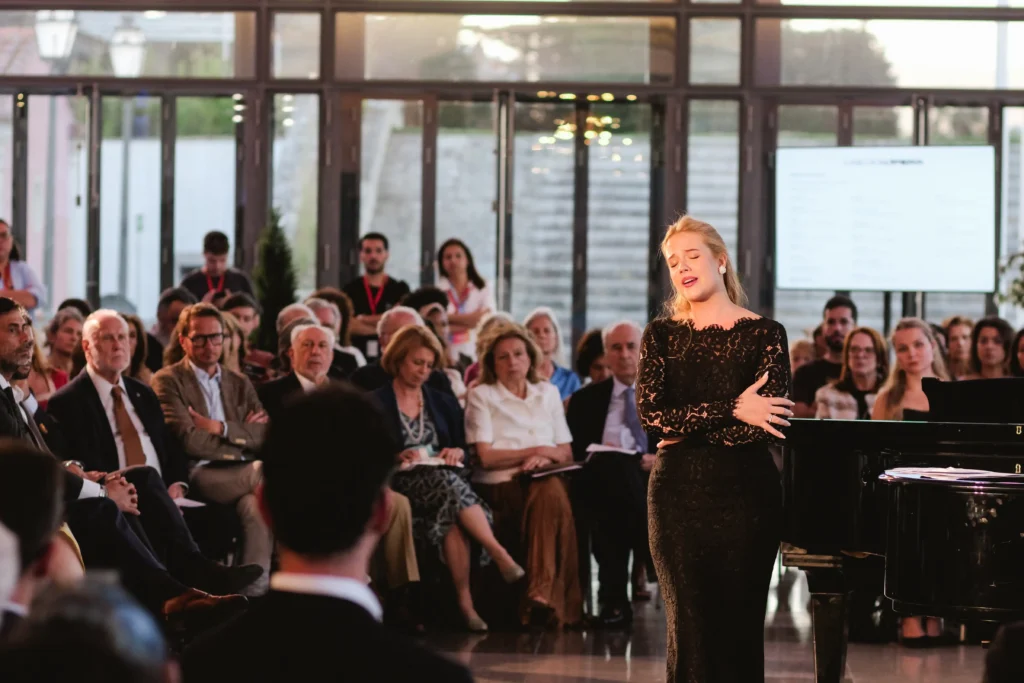
The programme took the audience on a journey through Mozart’s works – from the overture to “The Marriage of Figaro” to the finale of the same opera, via “The Magic Flute”, “La finta giardiniera”, “Idomeneo”, “Don Giovanni” and “Così fan tutte”. A selection that showcased the diversity of Mozart’s world, from opera seria to opera buffa, from tragedy to comedy, from tenor to soprano, from baritone to mezzo-soprano.
Constança Melo opened with “Der Hölle Rache” from The Magic Flute – one of the most demanding arias in the coloratura soprano repertoire, with its impossible high notes – and closed the concert with “In uomini, in soldati” from Così fan tutte, two completely different worlds which she portrayed with conviction and presence.
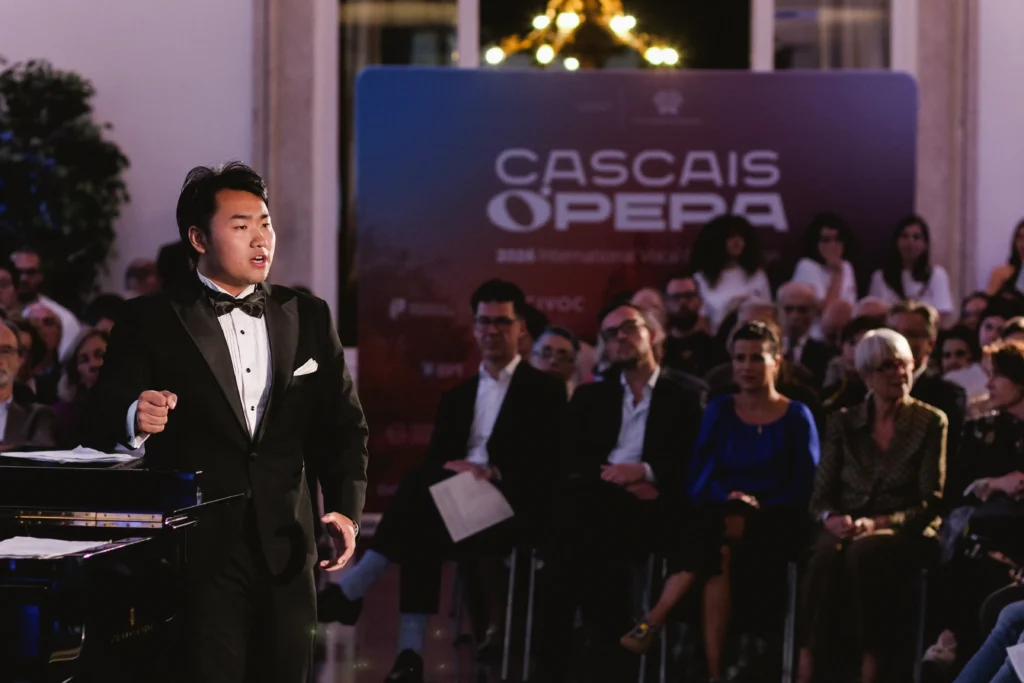
Tanja Elisa Glinsner brought La finta giardiniera to Cascais with “Va pure ad altri in braccio”, Pia Novak explored the drama of Idomeneo with Ilia’s lament, and Ana Gvozdenović presented one of the most unsettling scenes from that same opera. Nikolett Mráz and Zhenyu Wang immersed themselves in the world of Don Giovanni, whilst Junseok Hwang revisited Mozart’s most famous serenade with a twinkle in his eye.
Aleksandra Domashchuk sang “Porgi, amor” from The Marriage of Figaro – an aria of rare delicacy, in which the Countess laments her lost love – with a physical and vocal expression that went far beyond technique. Jamal Al Titi performed the Champagne Aria from Don Giovanni and then returned to Così fan tutte, whilst Judit Subirana Muntada and Ihor Mostovoi rounded off the programme with more Mozart from The Marriage of Figaro.
Moments when joy outweighed nerves
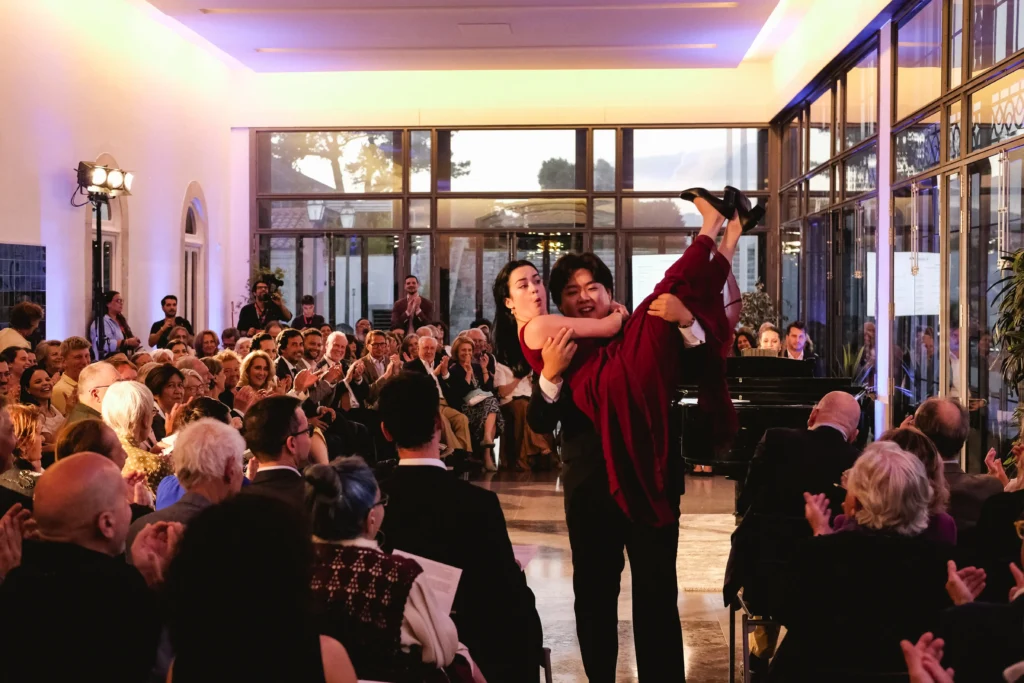
But it was the collective moments that lingered most in the memory. The duet “Là ci darem la mano” from Don Giovanni, sung by Junseok Hwang and Constança Melo, was one of the highlights of the evening – two singers who had known each other for less than 48 hours sharing a duet of Mozartian seduction, perfectly evident in their gestures and facial expressions, from Junseok Hwang’s seduction to Constança Melo’s coy demeanour, with a rapport and enjoyment that surprised the audience. You could see they were enjoying themselves. That they were genuinely having fun. Their exit from the ‘stage’, with Constança in Junseok Hwang’s arms, drew laughter from the audience.
The trio “Susanna, or via sortite” from The Marriage of Figaro – featuring Pia Novak, Ihor Mostovoi and Nikolett Mráz – was another moment in which the joy of singing clearly overcame any residual tension from the week of competition. Three voices playing off one another, with humour, with timing, with the lightness that Mozart demands, and which is so rarely found in high-pressure situations. The tension between Ihor Mostovoi and Nikolett Mráz, visible from the very first second, was complemented by Pia Novak’s movements across the room.
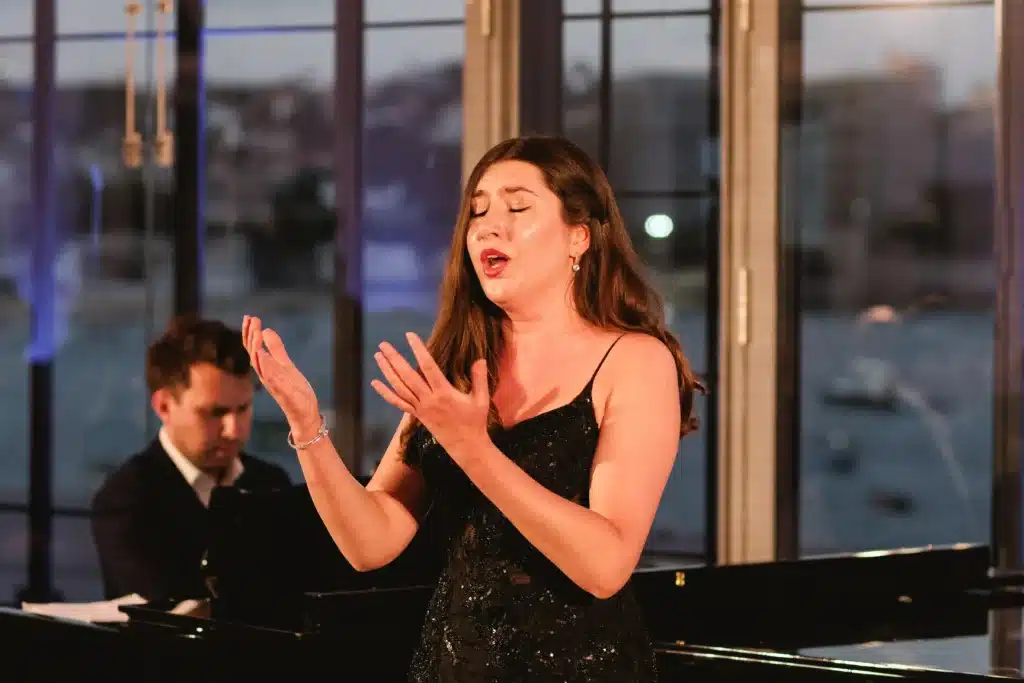
And then there was Aleksandra Domashchuk. Throughout the evening, the Ukrainian soprano was a shining example of how voice and interpretation can merge into a single gesture. In “Porgi, amore”, there was no separation between what she sang and what she felt – or at least that was what the audience saw and heard. The interconnection between voice and body, between technique and emotion, which is the ideal for any performer, was there, in that historic hall, unfolding. But the evening still had a surprise in store. Zhenyu Wang is young and this was his first international experience. And yet, in Don Giovanni’s “Il mio tesoro”, there was in him a delicacy and a sensitivity that cannot be taught – or which, when they exist, herald something. It is not merely a voice developing: it is an artist discovering himself.
A night that will remain in your memory
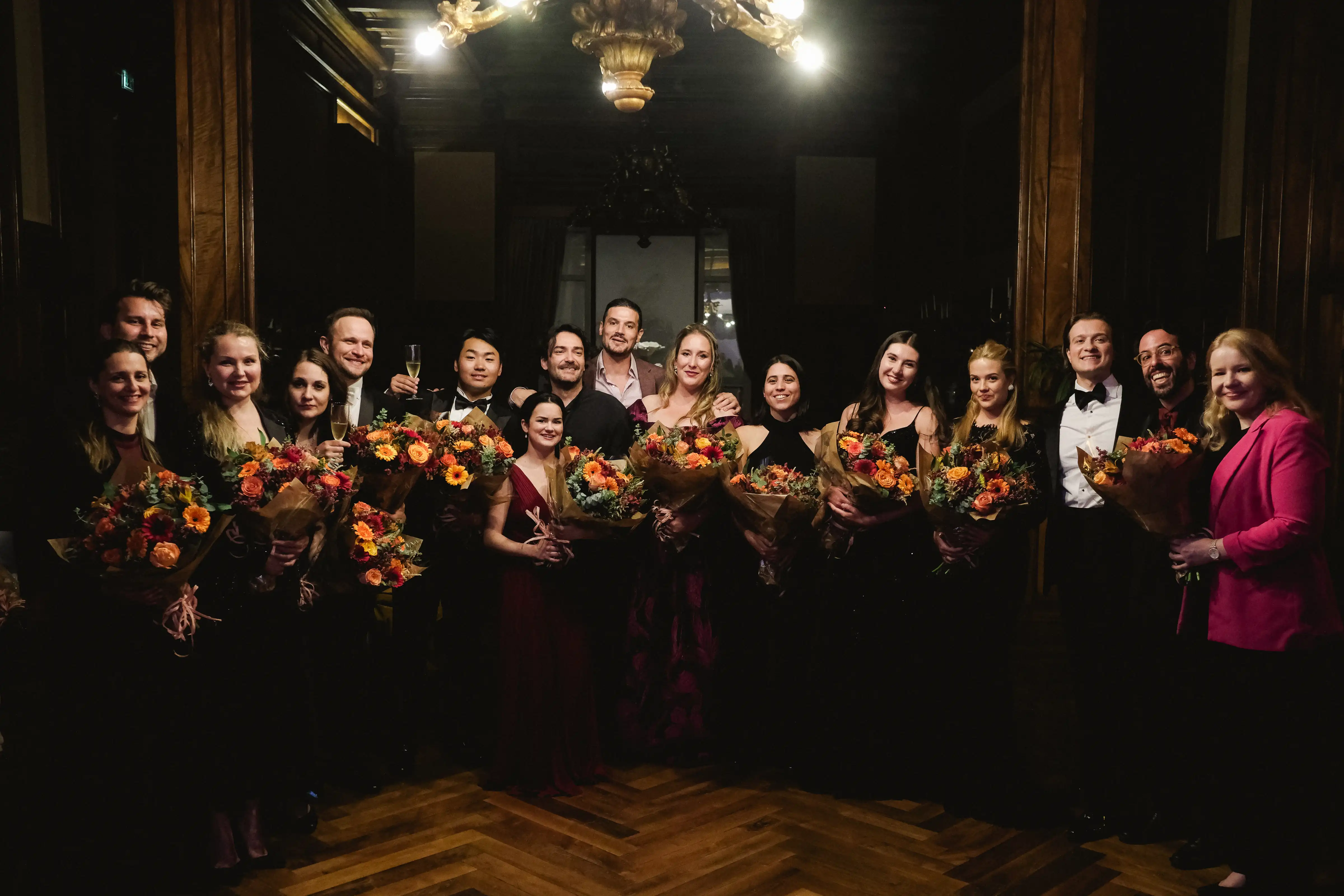
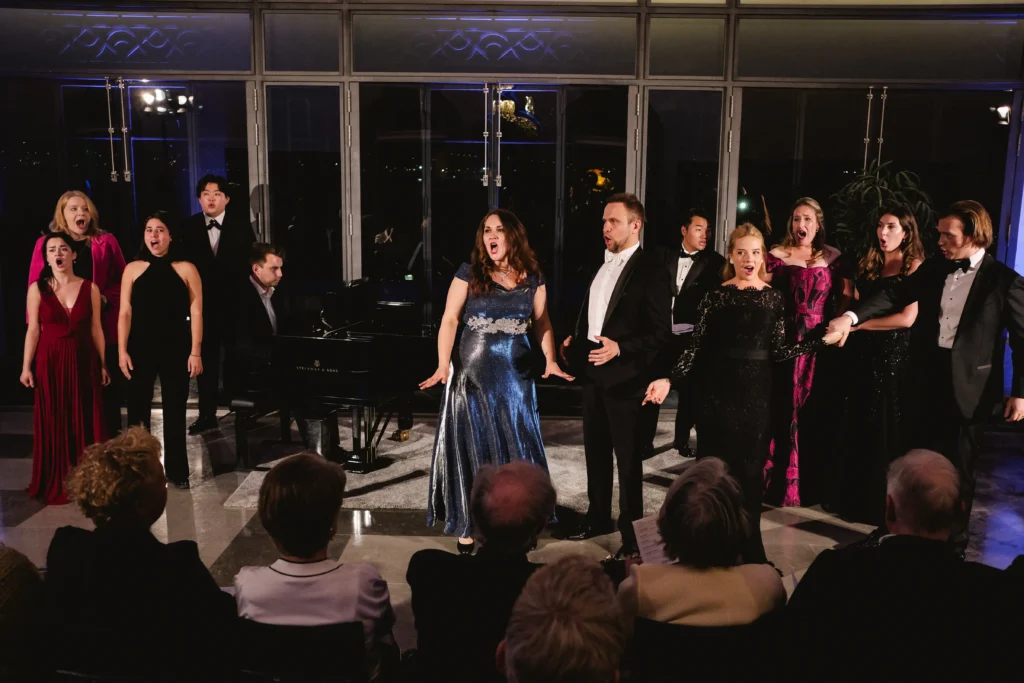
The finale as “Contessa, I forgive” the Marriage of Figaro brought together all the twelve singers in the box at a moment that was, probably, the most exciting of the night. It is a dinner of reconciliation – the Count lost the Condessa, and she lost it – but Mozart transforms that simple gesture into something of rare collective beauty: all the voices come together, each one with its own line, and the result is greater than both parties. Naquela hall of the Cidadela, with those twelve voices that a week before were poorly understood, or indeed it was even more powerful. You could see it in their faces, their posture, the way they looked at each other: they were no longer twelve singers competing – they were twelve musicians making music together. An image that perfectly sums up what Cascais Opera, at its core, always wanted to be.
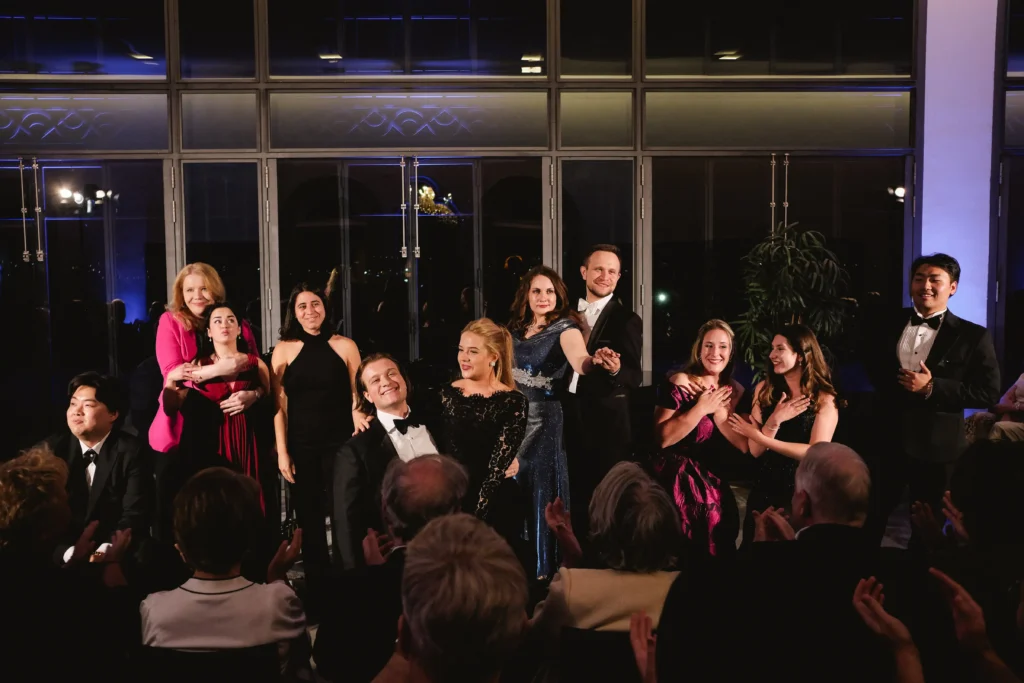
At the piano, Ana Filipa Luz, Ekaterina Byron, and Michael Saks accompanied the twelve semifinalists with the sensitivity and precision that the repertoire demands. And Aleksandar Nikolić, the Serbian director who prepared the concert in the masterclasses of the previous days, saw his work come to fruition on a night when the singers clearly showed that they had not only learned the notes – but they had also learned to inhabit the music. His attention and care were clearly demonstrated not only by the performance of his “pupils,” but also by their “demand” that, at the end of the performance, he also goes on stage and receive due recognition.
Singing here, Sergei Leiferkus said before the concert, can make a difference. You never know what’s on the plate. This night, in the Cidadela de Cascais, twelve voices sing Mozart without red – and to music fez or rest.