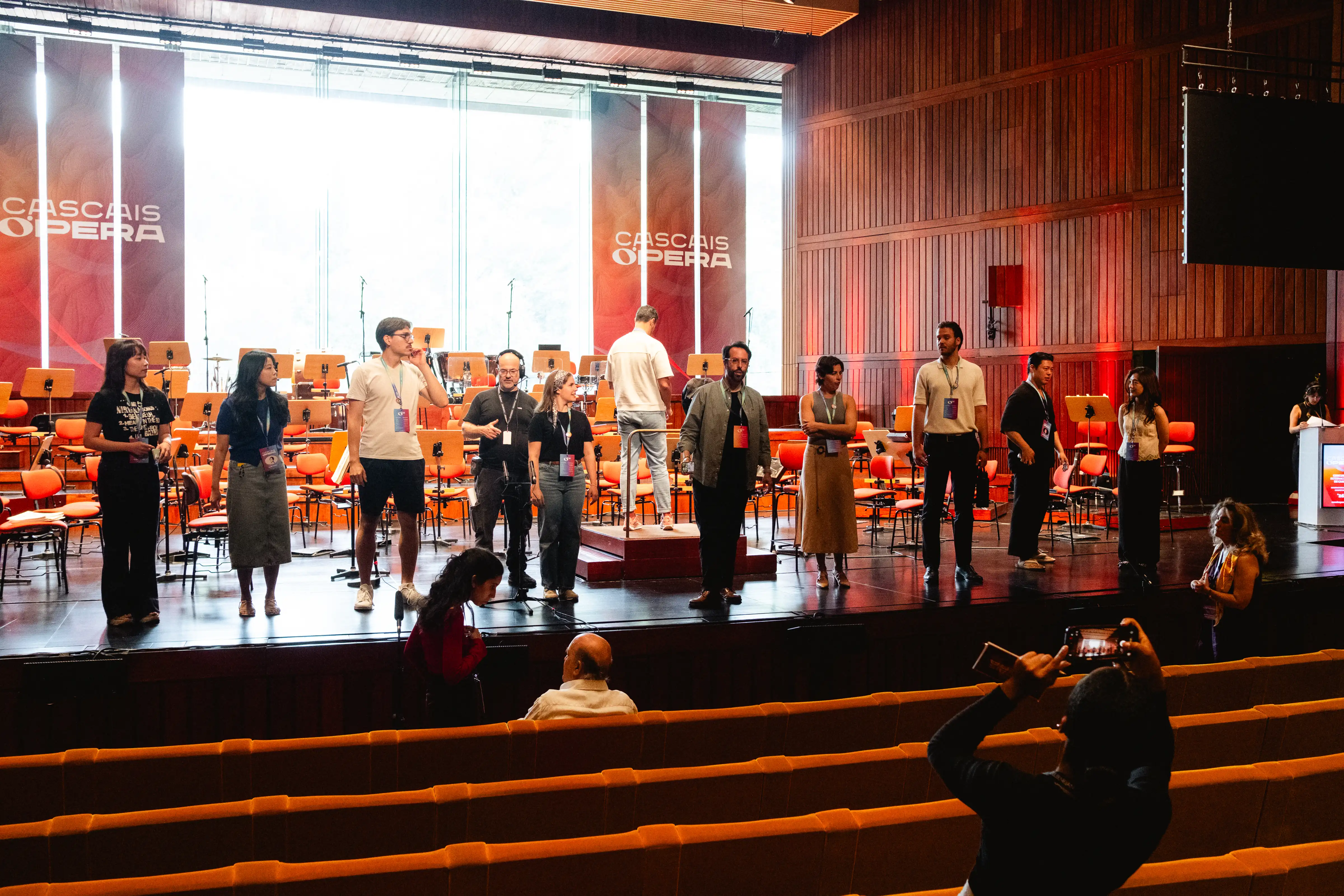
There is a moment in the preparation of any concert when everything changes. It is when the concert hall enters the equation. When the stage ceases to be imagined and becomes real, when the orchestra replaces the piano, when the sound bounces off the walls and is no longer the same sound that has been rehearsed for weeks in a small studio. For the eight finalists of Cascais Ópera 2026, that moment is today.
The Grand Auditorium of the Calouste Gulbenkian Foundation opens its doors today for the final dress rehearsal. It is the first time that Arianna Manganello, Beatriz Maia, Junyoung Choi, Ljubomir Milanović, Nuri Park, Seonwoo Lee, Tomislav Jukić and Wu Tongyu will sing on that stage – one of Portugal’s most iconic, with acoustics that are, in themselves, a selling point.
Alongside them, for the first time with a full orchestra, will be conductor Antonio Pirolli and the Cascais Symphony Orchestra. A dress rehearsal is not yet the concert, but it is the closest thing there is. It is the moment to get a feel for the space, to fine-tune the timing, to understand how the voice behaves in that specific hall, with that specific orchestra, on that stage.
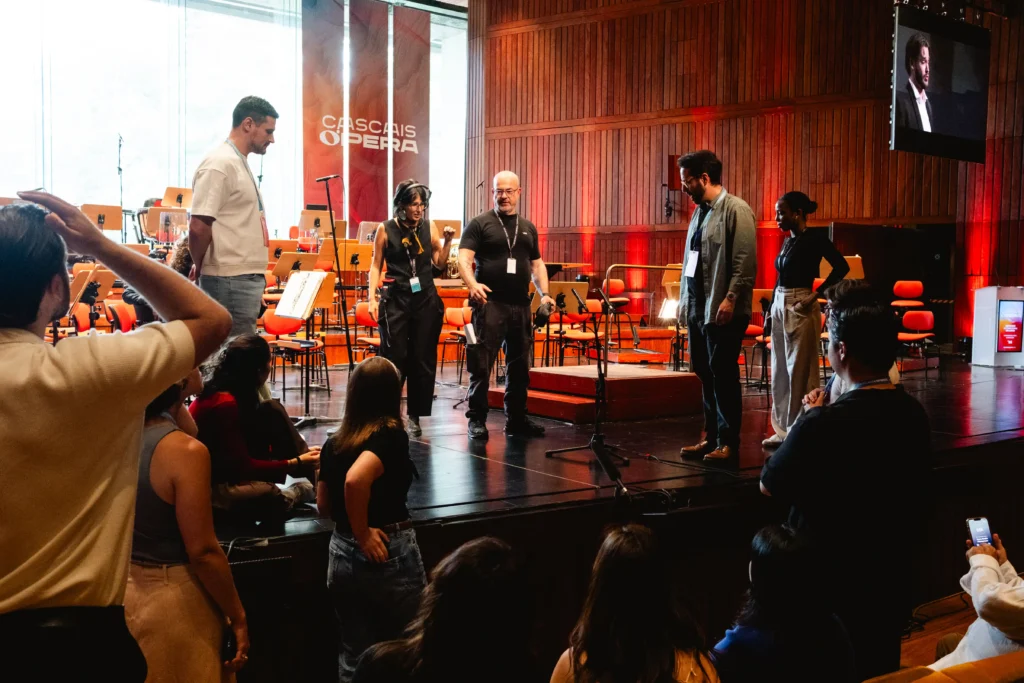
Eight voices, eight stories
The eight finalists arrive at the Gulbenkian with very different backgrounds, but with one thing in common: they have all been through an extraordinarily intense week. Auditions, masterclasses, semi-finals, the announcement of the results, and more masterclasses. And now, on the last day before the final, the dress rehearsal.
Arianna Manganello comes from Berlin, where she has been a member of the Deutsche Oper ensemble since 2020. Beatriz Maia, the only Portuguese contestant, is completing her master’s degree in Munich and will join the Opera Studio at the Vienna State Opera in September. Junyoung Choi, a South Korean baritone, won this year’s AsLiCo competition and has debuts as Macbeth and Renato on the horizon. Ljubomir Milanović, the youngest of the baritones, is studying in Mannheim on a scholarship from the German National Academic Foundation.
Nuri Park, a South Korean soprano, is studying in Vienna and has already graced the stages of the Korean National Opera. Seonwoo Lee, also a South Korean soprano, trained at the Opernstudio of the Bayerische Staatsoper and was praised by Opera News for her “extraordinary focus and clarity”. Tomislav Jukić, a Croatian tenor, is a member of the International Opera Studio at the Opernhaus Zürich and has participated in the Young Singers Project at the Salzburg Festival. And Wu Tongyu, the youngest of them all at just 23, comes from Shanghai, having graduated with first-class honours from the Conservatory of Music.
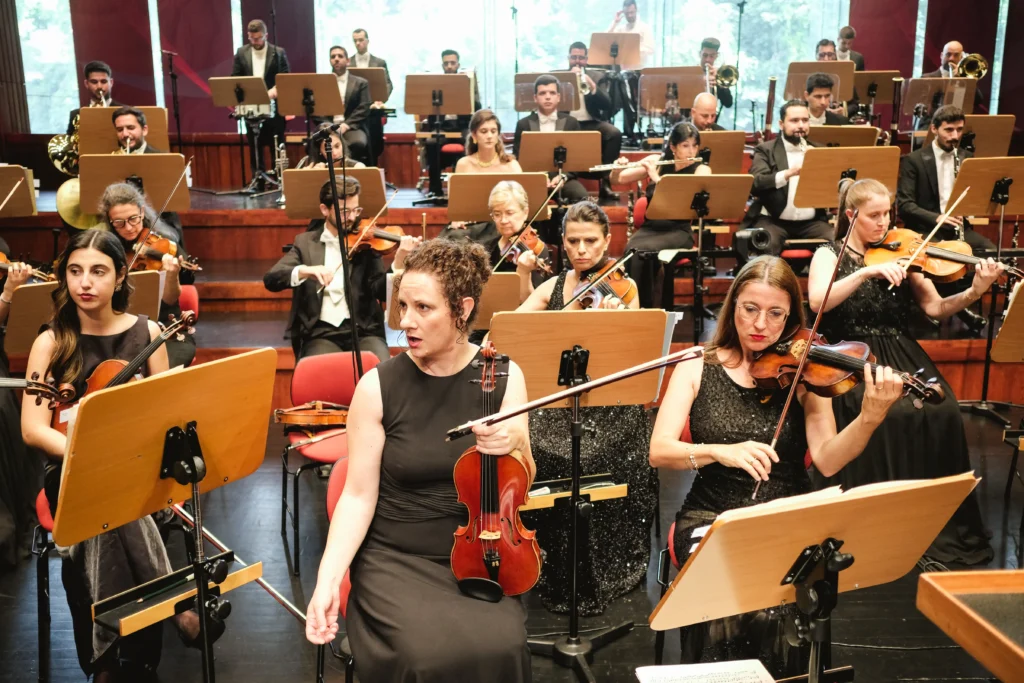
What goes into a dress rehearsal
A dress rehearsal is not a concert. But it is the last chance to make mistakes before it is no longer possible to do so. It is the moment to practise entrances, work out the timing with the conductor, and get a feel for the venue. To turn preparation into certainty.
Tomorrow, when the Gulbenkian Grand Auditorium fills at 6 pm, all that will be behind us. All that will remain is the music… and the decision of a jury that has listened to dozens of voices throughout this week and will hear these eight for the last and most important time tomorrow.
Today is the day to arrive at the hall and realise: this is the place. This is the stage.